Every year, millions of people enter the stock market dreaming of financial freedom.
Some want to escape their jobs.
Some want fast money.
Others believe trading can completely change their lives.
At first, trading looks exciting:
- Fast-moving charts
- Profits flashing on screens
- Social media traders showing luxury lifestyles
- Screenshots of massive gains
- Stories of overnight success
It creates the belief that trading is easy.
But after a few months, reality begins to appear.
Most retail traders slowly discover that the market is not just about strategies, indicators, or predictions.
The real challenge is much deeper.
Trading tests:
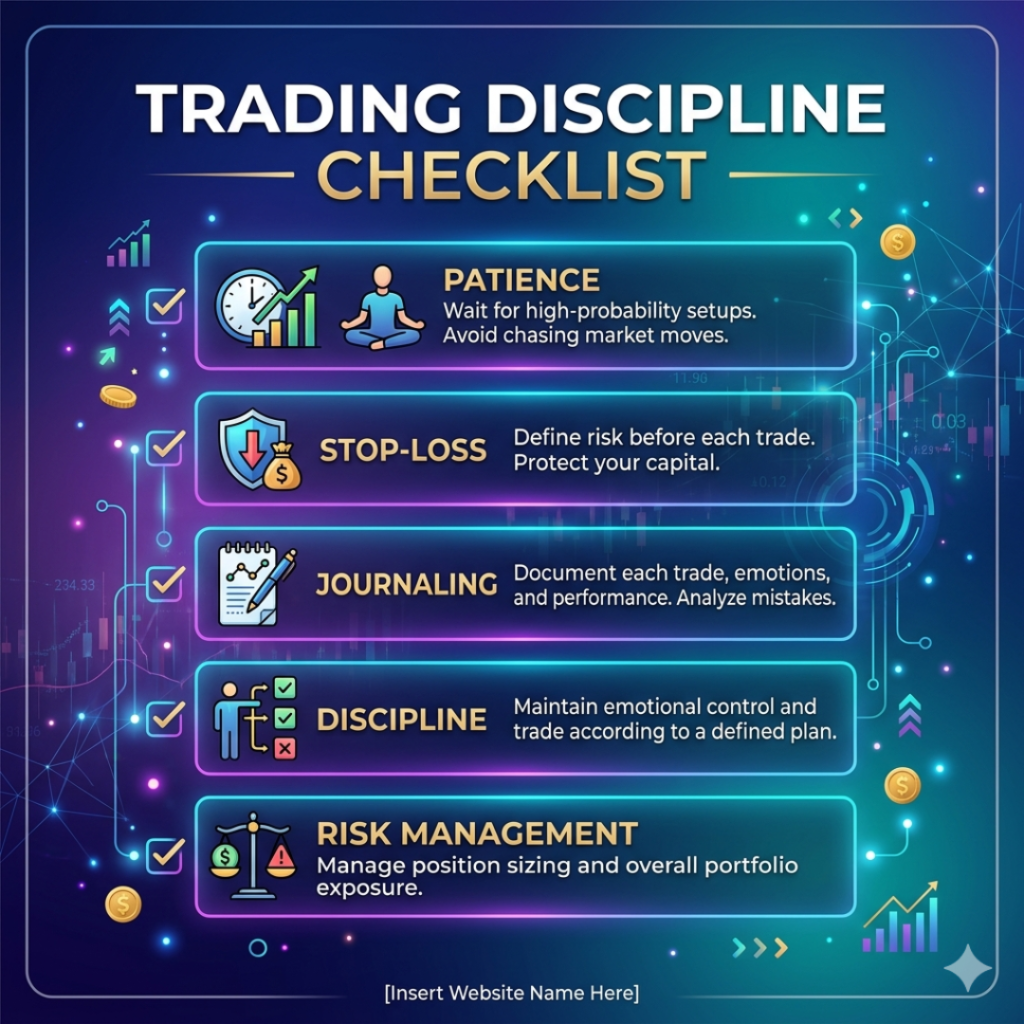
- Patience
- Discipline
- Emotional control
- Risk management
- Self-awareness
And this is the painful truth most people never talk about.
Trading Is Emotionally Harder Than Most People Expect
Many beginners enter trading believing success depends only on the following:
- Technical analysis
- Chart patterns
- Indicators
- News analysis
- Entry and exit setups
While these skills are important, they are not enough.
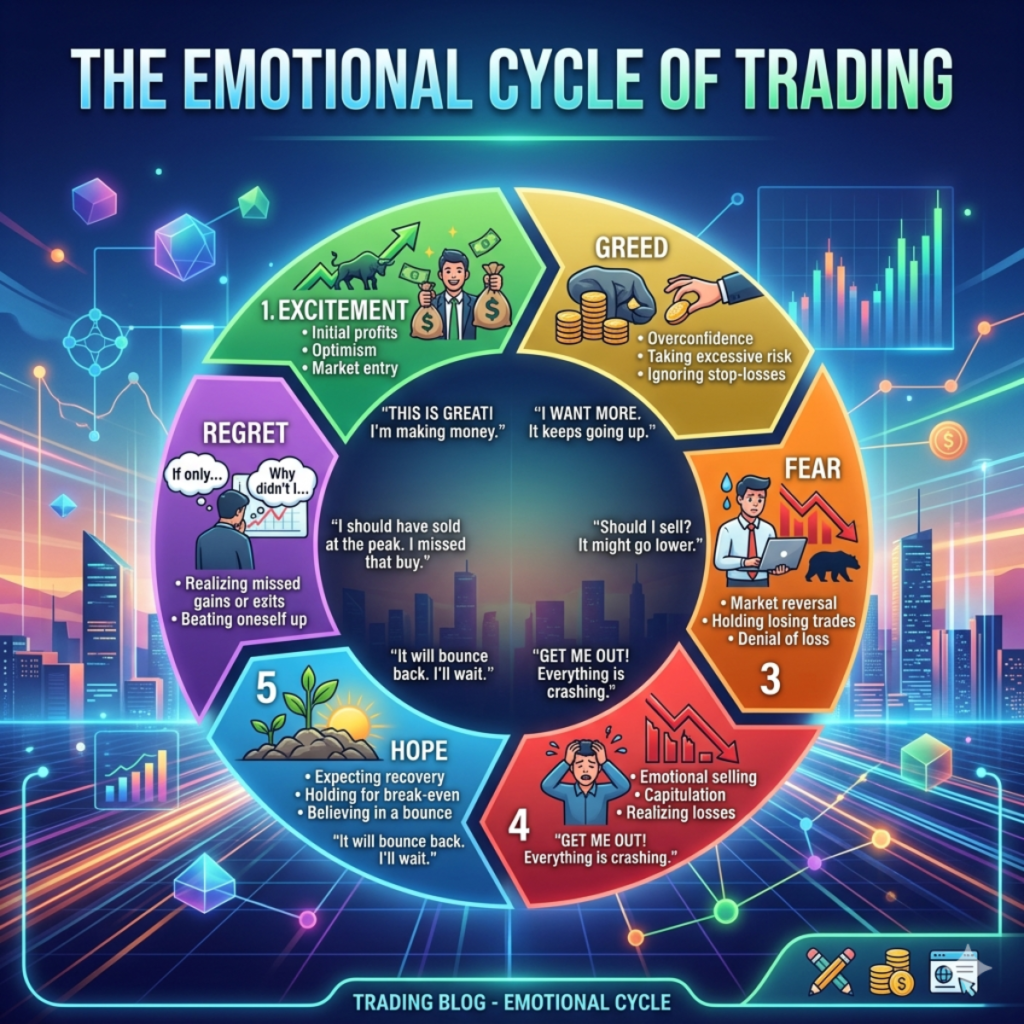
The biggest battle in trading happens inside the mind.
When real money is involved, emotions become extremely powerful.
A trader may know the correct strategy logically, but emotions often force completely different decisions during live market conditions.
That is why many intelligent people still lose money consistently in trading.
Social Media Creates Unrealistic Expectations
One of the biggest problems in modern trading is social media influence.
Every day traders see:
- Profit screenshots
- Luxury cars
- Huge option gains
- “Turned ₹5,000 into ₹1 lakh” stories
- Viral trading reels
But very few people show the following:
- Consistent losses
- Emotional breakdowns
- Blown accounts
- Sleepless nights
- Years of struggle
This creates unrealistic expectations for beginners.
Many traders start believing the following:
“If others are making huge profits daily, why not me?”
As a result, they take excessive risks trying to achieve unrealistic returns quickly.
This usually leads to emotional trading and major losses.
Most Traders Ignore Risk Management Until It’s Too Late
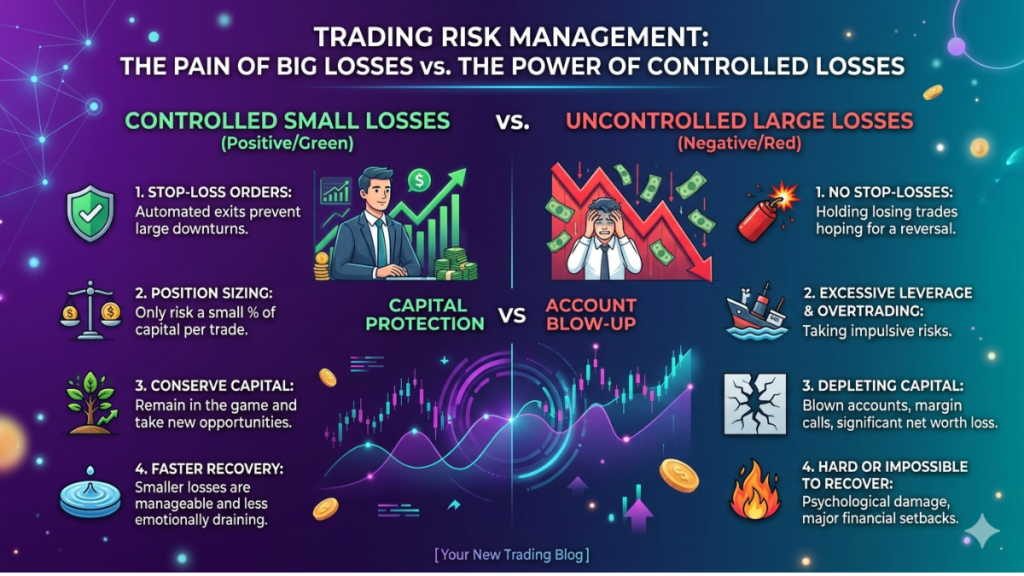
One painful truth in trading is that most retail traders focus heavily on profits but ignore risk.
Beginners often think:
- “How much can I make?”
instead of: - “How much can I lose?”
This mindset becomes dangerous very quickly.
Many traders:
- Use oversized positions
- Ignore stop-losses
- Average losing trades
- Trade with borrowed money
- Take excessive leverage
The market eventually punishes this behavior.
Professional traders understand something important:
Survival is more important than fast profits.
Protecting capital is the foundation of long-term success.
Without proper risk management, even good strategies eventually fail.
Emotional Trading Quietly Destroys Accounts
Most trading losses do not happen because traders lack intelligence.
They happen because emotions slowly take control.
Common emotional mistakes include:
- Revenge trading after losses
- Overtrading during volatility
- Fear of missing out (FOMO)
- Overconfidence after profits
- Refusing to exit losing trades
These emotional reactions create poor decisions repeatedly.
The dangerous part is that emotional trading often feels logical in the moment.
A trader may believe:
- “The market will reverse.”
- “I’ll recover this loss quickly.”
- “This breakout looks strong.”
- “I cannot miss this move.”
But emotions distort judgment.
Over time, these repeated mistakes slowly damage trading accounts.
The Market Does Not Reward Impatience
Many beginners enter trading searching for quick financial freedom.
They expect:
- Daily profits
- Fast income
- Instant consistency
- Quick account growth
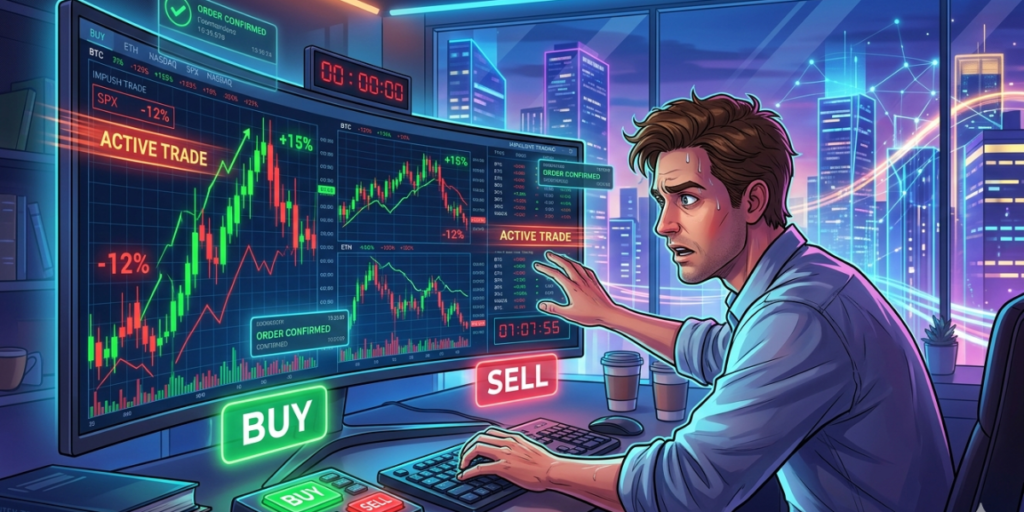
But the market rarely rewards impatience.
In reality, successful trading usually requires:
- Years of learning
- Emotional maturity
- Discipline
- Patience
- Consistency
Unfortunately, many traders quit before reaching this stage.
Some traders destroy their accounts by trying to become rich too quickly.
They increase leverage aggressively after a few winning trades, believing they have mastered the market.
Then one bad trading day wipes out months of progress.
Overtrading Is One of the Biggest Silent Killers
Retail traders often believe the following:
“More trades mean more opportunities.”
But excessive trading usually creates:
- Poor-quality entries
- Emotional exhaustion
- Higher brokerage costs
- Reduced discipline
Many traders trade continuously simply because they feel the need to stay active.
This creates emotional fatigue and poor decision-making.
Successful traders understand that
Not trading is also a trading decision.
Patience often creates better results than constant activity.
Most Traders Refuse to accept small losses.
Accepting small losses is emotionally difficult.
A trader may enter a trade with:
- Proper analysis
- Defined stop-loss
- Risk management rules
But once the trade moves against them, emotions interfere.
Instead of exiting, they start hoping.
The trader tells themselves,
- “It will recover.”
- “I’ll exit at breakeven.”
- “Just give it more time.”
Meanwhile, the loss keeps increasing.
Small manageable losses slowly become major account damage.
Professional traders understand:
Small losses are normal business expenses in trading.
Retail traders often treat losses emotionally instead of professionally.
Winning can sometimes be more dangerous than losing.
One surprising truth about trading is that winning streaks can become dangerous.
After several profitable trades, traders often become overconfident.
This creates risky behavior:
- Increasing position sizes
- Ignoring trading rules
- Taking random setups
- Removing stop-losses
The trader begins feeling emotionally invincible.
But markets constantly change.
One emotionally driven trade can erase weeks of profits within minutes.
That is why experienced traders focus more on discipline than excitement.
Technical Knowledge Alone Does Not Create Profitable Traders
Today, trading education is available everywhere:
- YouTube
- Telegram
- Online courses
- Trading communities
Most traders already know:
- Candlestick patterns
- Support and resistance
- RSI indicators
- Chart analysis
- Option chain basics
Yet most still struggle.
Why?
Because knowing something and executing it emotionally are completely different things.
Trading success depends heavily on:
- Mental discipline
- Emotional stability
- Self-control
- Risk management
These skills are rarely taught properly.
Consistency Is Boring — And That’s Why Most Traders Avoid It
One painful reality is that successful trading often looks boring.
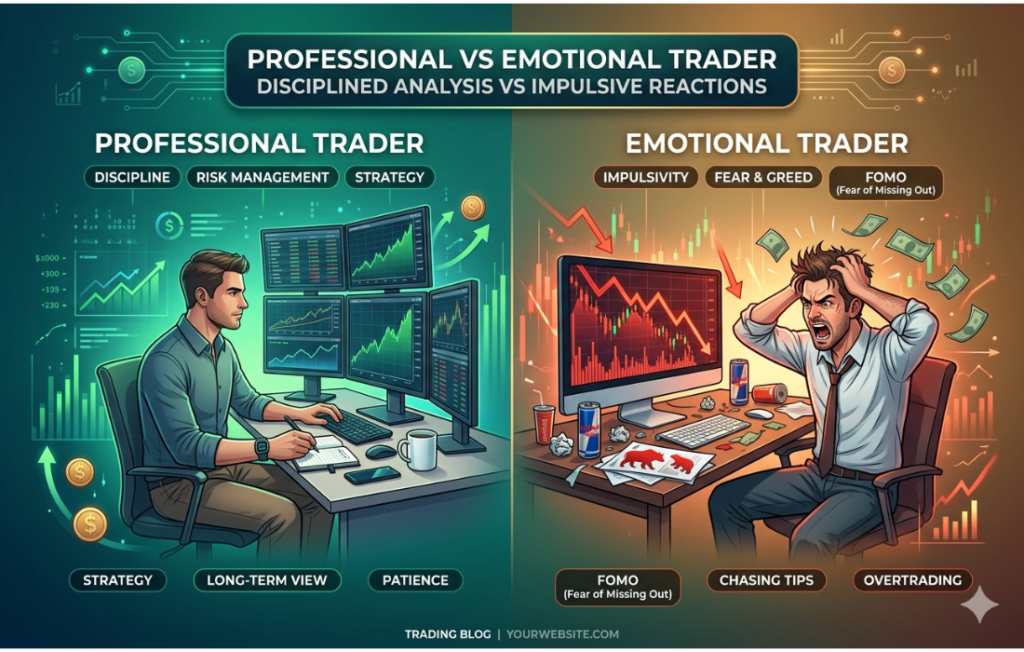
Professional traders usually:
- Take fewer trades
- Focus on risk control
- Avoid emotional excitement
- Follow routines consistently
- Protect capital carefully
Retail traders often prefer excitement:
- Fast scalping
- High leverage
- Expiry day gambling
- Continuous market action
But excitement and consistency rarely go together in trading.
Long-term profitability usually comes from discipline, not adrenaline.
The Real Goal of Trading
Most people believe trading success means the following:
- Huge profits
- Luxury lifestyle
- Fast wealth
But sustainable trading is much simpler.
The real goal is
- Protecting capital
- Staying emotionally stable
- Managing risk
- Building consistency slowly
Professional traders understand that survival itself is an advantage.
A trader who survives emotionally and financially long enough has a much higher chance of long-term success.
Practical Ways to Become a Better Trader
Here are some realistic ways traders can improve gradually:
1. Reduce Position Sizes
Smaller positions reduce emotional pressure and improve decision-making.
2. Maintain a Trading Journal
Track:
- Entries
- Exits
- Emotional state
- Mistakes
- Lessons learned
This builds self-awareness.
3. Focus on One Strategy
Avoid constantly switching between:
- Scalping
- Swing trading
- Option buying
- Intraday trading
Master one approach first.
4. Set Daily Loss Limits
Once your maximum loss is reached:
- Stop trading
- Avoid revenge trading
- Review mistakes calmly later
5. Avoid Comparing Yourself to Social Media Traders
Most online trading content shows only highlights, not the full reality.
Focus on your own progress.
Final Thoughts
The painful truth about retail trading is that the market is emotionally harder than most people expect.
Most traders do not fail because they are unintelligent.
They fail because:
- Emotions overpower discipline
- Risk management gets ignored
- Expectations become unrealistic
- Patience disappears
- Overconfidence increases
Trading success is not just about predicting charts.
It is about managing yourself under pressure.
The market constantly tests psychology, patience, and emotional control.
And traders who learn to master those areas give themselves a much better chance of surviving and succeeding long-term.
Suggested FAQ Section for SEO
Why do most retail traders lose money?
Most retail traders lose because of emotional trading, poor risk management, overtrading, and unrealistic expectations.
Is trading psychology really important?
Yes. Trading psychology is one of the most important factors in long-term trading success.
Why is emotional trading dangerous?
Emotional trading causes impulsive decisions like revenge trading, overtrading, and refusing to exit losing positions.
What is the biggest mistake beginner traders make?
Many beginners focus only on profits while ignoring risk management and emotional discipline.
Can retail traders become consistently profitable?
Yes, but it usually requires patience, discipline, risk management, and emotional control developed over time.