Every day, thousands of traders across India enter the futures & options market believing they can beat the system. They watch YouTube videos, learn option chain analysis, follow Telegram calls, and spend hours studying indicators.
Yet, after months or years of trading, most end up facing the same reality — consistent losses.
The shocking part is that many of these traders are not beginners. They understand charts, know support and resistance, and can explain technical indicators better than most people.
So why are they still losing money?
The answer is uncomfortable but important:
Most retail traders don’t lose because of lack of knowledge.
They lose because of emotional decision-making and poor trading behavior.
That is the real battlefield in F&O trading.
The Reality of Indian F&O Trading
India’s derivatives market has exploded in recent years. Retail participation in Nifty options, Bank Nifty expiry trades, and stock options has grown rapidly because of:
- Easy mobile trading apps
- Social media trading content
- Low capital entry
- Weekly expiry excitement
- Quick profit expectations
But alongside this growth came a harsh truth.
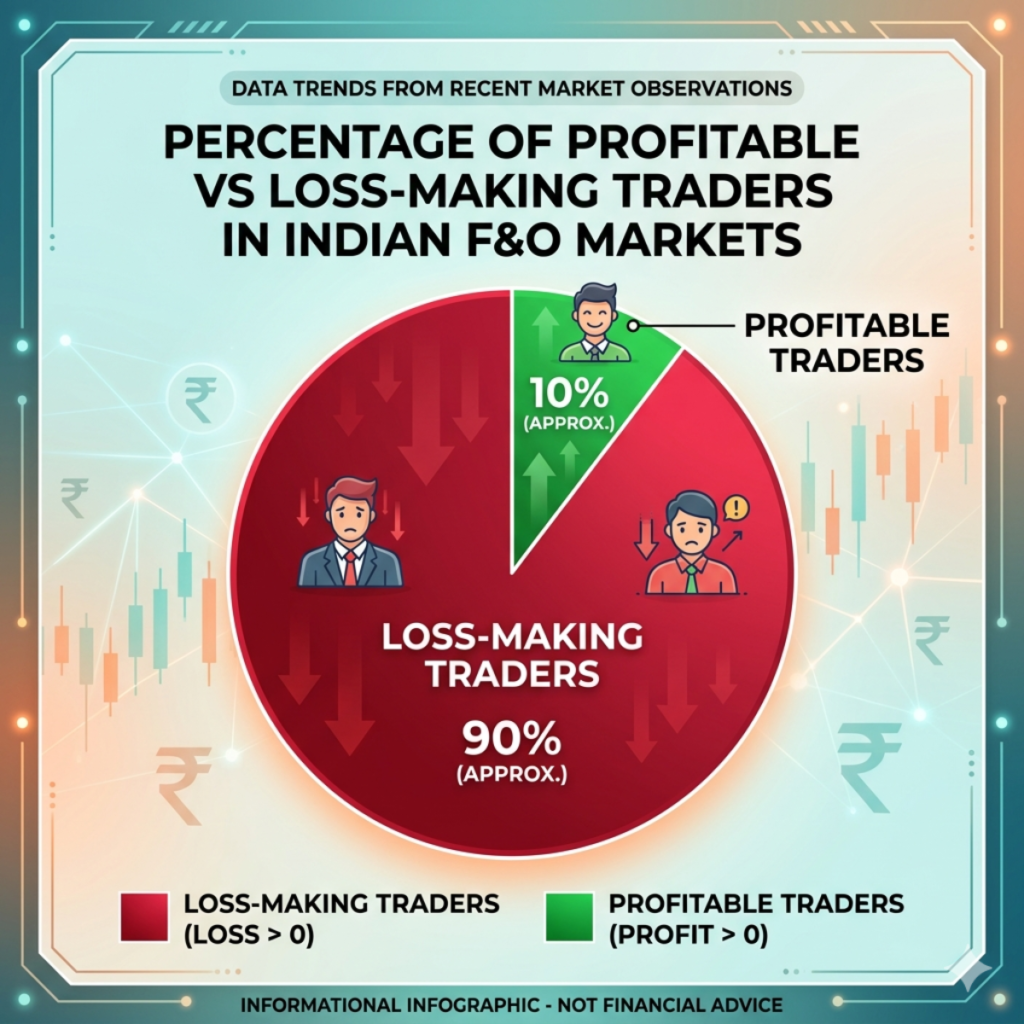
A very high percentage of retail F&O traders continue to lose money consistently year after year.
Many traders believe:
- “I just need a better strategy.”
- “I need a new indicator.”
- “Maybe this premium buying setup will work.”
But even profitable strategies fail when emotions take control.
The Biggest Reason Traders Fail: Emotional Trading
Most trading losses happen because traders abandon their own rules during live market conditions.
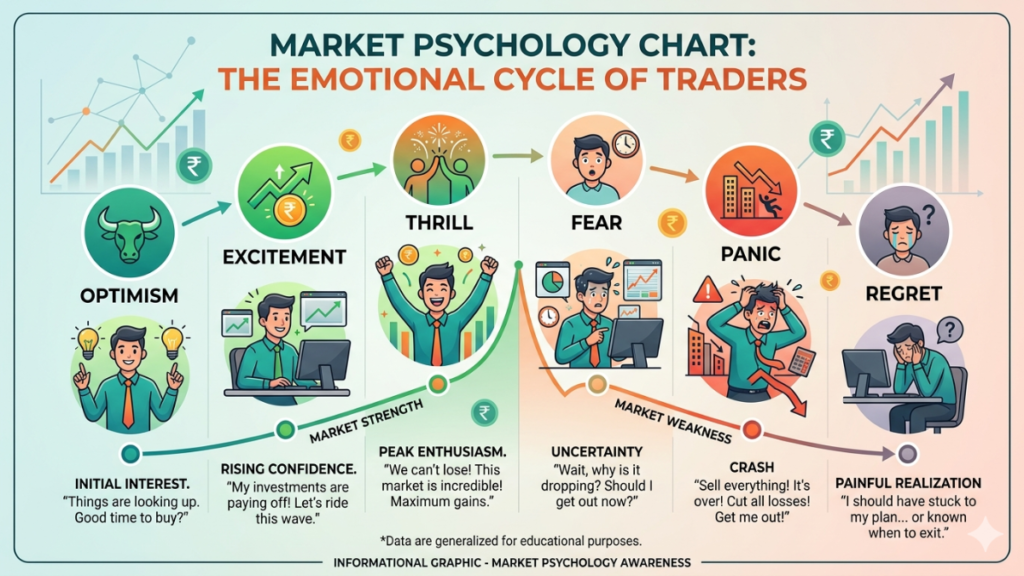
When real money is involved, emotions become stronger than logic.
A trader may enter a trade with:
- A proper setup
- Clear stop-loss
- Risk management plan
- Entry and exit strategy
But after the trade starts moving against them, emotions begin to interfere.
Fear, greed, frustration, revenge, and overconfidence slowly take control.
This is where losses start compounding.
1. Revenge Trading — The Fastest Way to Destroy a Trading Account
Imagine this situation:
You take a loss in a Nifty options trade during the morning session.
Instead of accepting the loss calmly, your mind immediately wants recovery.
You enter another trade quickly:
- Bigger quantity
- Poor setup
- No confirmation
- Pure emotion
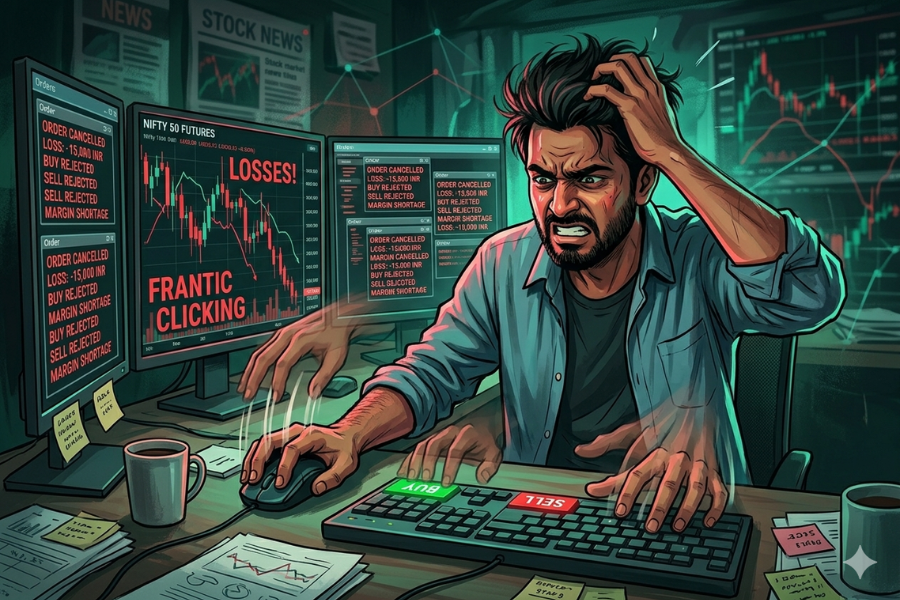
This is called revenge trading.
The trader is no longer reacting to the market.
They are reacting to emotional pain.
The dangerous part is that revenge trades usually happen:
- Very quickly after a loss
- Without proper analysis
- With higher risk exposure
As a result, one small loss often becomes a much bigger loss within minutes.
2. Overtrading — Small Losses That Slowly Drain Capital
Overtrading is one of the most common problems among Indian retail traders.
Many traders believe:
“More trades mean more opportunities.”
In reality, excessive trading usually leads to:
- Poor-quality entries
- Emotional exhaustion
- High brokerage charges
- Increased slippage
- Faster capital destruction
A trader may take:
- 20–30 trades in a single week
- Multiple expiry trades daily
- Random scalping positions without proper planning
Even if some trades become profitable, costs continue accumulating:
- Brokerage
- STT
- Exchange charges
- GST
- Slippage
These hidden expenses silently reduce profitability.
Many traders never realize how much money is lost through excessive trading activity alone.
3. Recency Bias — When Winning Makes Traders Dangerous
Winning streaks can sometimes be more dangerous than losses.
Suppose a trader makes profits for three consecutive expiry sessions.
Now the brain starts believing:
- “I understand the market perfectly.”
- “This setup cannot fail.”
- “I should increase quantity.”
This psychological trap is known as recency bias.
Recent success creates false confidence.
The trader:
- Increases position size
- Ignores stop-losses
- Takes lower-quality trades
- Assumes profits will continue automatically
But markets constantly change.
One bad expiry day can erase weeks of profits within hours.
Professional traders understand an important truth:
Every trade is independent.
Past profits do not guarantee future success.
4. Refusing to Exit Losing Trades
This is one of the most damaging habits in options trading.
A trader enters a position with a planned stop-loss.
But when the loss appears, the brain says:
- “It will recover.”
- “I’ll exit at breakeven.”
- “Just give it more time.”
Instead of exiting early, the trader keeps holding the position.
Meanwhile,
- Theta decay reduces option premium
- Market momentum weakens
- Losses continue increasing
A manageable loss slowly becomes a major account drawdown.
This behavior is caused by emotional attachment to being “right.”
Many traders prefer holding losing trades rather than accepting they made a mistake.
Unfortunately, markets do not reward ego.
Why Trading Knowledge Alone Is Not Enough
Most traders already know basic trading rules:
- Use stop-loss
- Avoid overtrading
- Control emotions
- Follow risk management
The problem is not lack of information.
The real challenge is applying discipline during live trading pressure.
When markets become volatile:
- Fear overrides logic
- Greed overrides patience
- Hope overrides risk management
This is why many traders continue repeating the same mistakes despite years of experience.
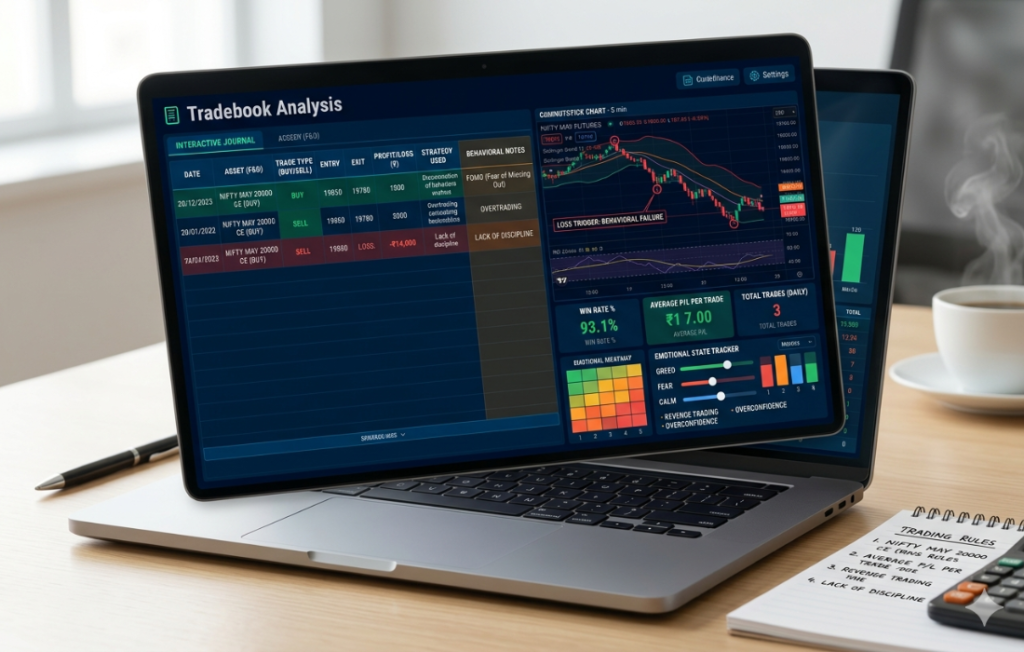
Your tradebook reveals everything about your psychology.
A trading statement is more than a profit-and-loss report.
It is a mirror of trader behavior.
By carefully analyzing trade history, traders can identify:
- Revenge trading patterns
- Excessive trading frequency
- Emotional position sizing
- Worst-performing trading hours
- Weakest market conditions
- Most profitable setups
Most retail traders never study their own behavioral data deeply.
They focus only on:
- Daily profit
- Daily loss
- Winning percentage
But real improvement happens when traders analyze the following:
“Why did I take this trade emotionally?”
That single question can change trading performance completely.
Consistent Traders Focus More on Behavior Than Indicators
Many successful traders eventually realize something important:
Long-term profitability comes less from finding perfect indicators and more from controlling behavior.
Profitable traders usually:
- Take fewer trades
- Follow strict risk limits
- Accept losses quickly
- Avoid emotional decisions
- Stay patient during uncertain conditions
They understand that preserving capital is more important than chasing excitement.
In F&O trading:
Survival itself becomes a competitive advantage.
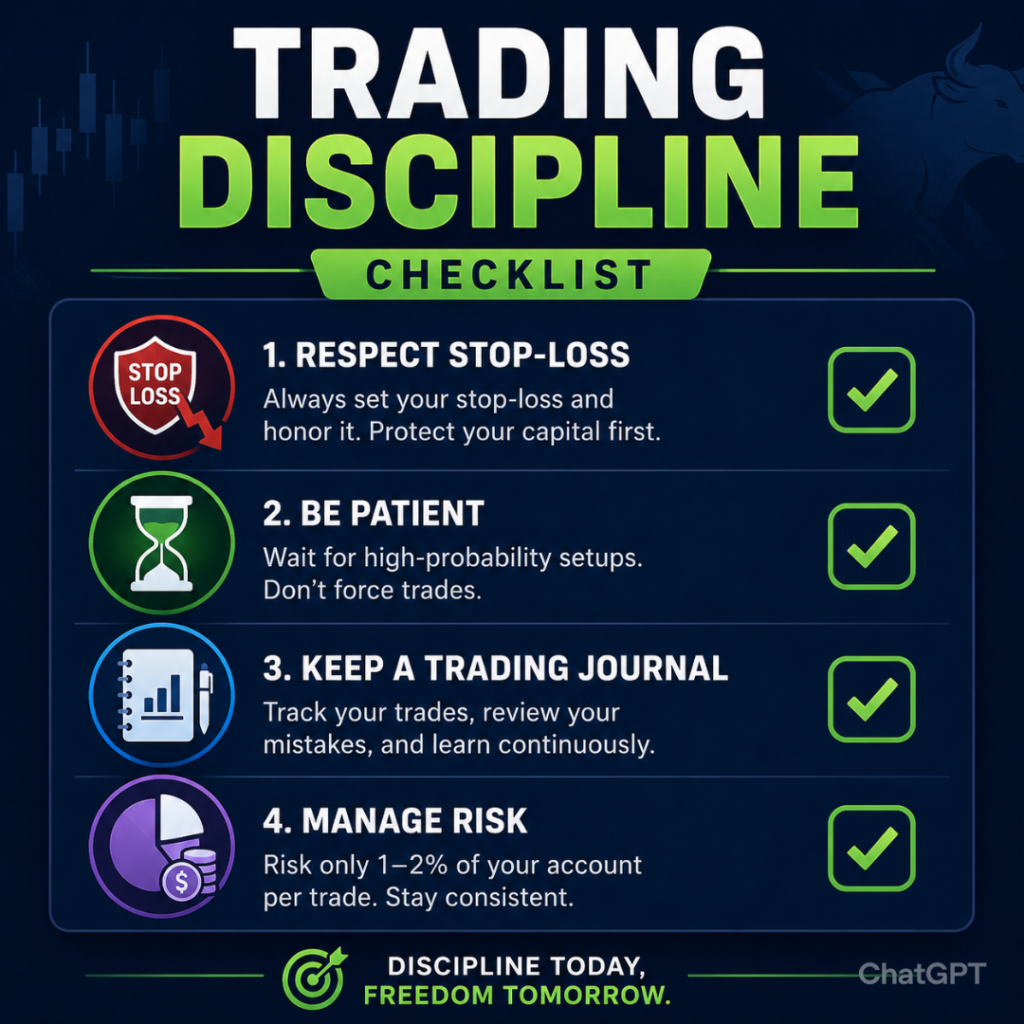
Practical Ways to Improve Trading Discipline
Here are some practical methods traders can use to reduce emotional mistakes:
Maintain a Trading Journal
Write down:
- Entry reason
- Exit reason
- Emotional state
- Mistakes made
- Lessons learned
This increases self-awareness significantly.
Set Daily Loss Limits
Decide a maximum daily loss amount.
Once reached:
- Stop trading immediately
- Avoid revenge entries
- Review mistakes calmly later
Reduce Position Size
Smaller positions reduce emotional pressure.
Many traders improve simply by lowering quantity and focusing on process instead of fast profits.
Avoid Continuous Screen Watching
Watching every candle creates anxiety and impulsive decisions.
Focus only on planned setups.
Follow One Strategy Consistently
Jumping between:
- Scalping
- Swing trading
- Option buying
- Option selling
- Expiry trading
creates confusion and inconsistency.
Master one approach first.
The Real Goal of Trading
Many beginners enter trading hoping for:
- Quick money
- Instant financial freedom
- Daily profits without stress
But sustainable trading is very different.
Real trading success comes from:
- Emotional stability
- Risk control
- Consistency
- Patience
- Self-awareness
The market constantly tests psychology more than intelligence.
That is why two traders using the same strategy can produce completely different results.
One follows discipline.
The other follows emotion.
And over time, that difference becomes massive.
Final Thoughts
The majority of Indian F&O traders do not fail because they are unintelligent.
They fail because emotions silently influence their decisions:
- Revenge trading after losses
- Overconfidence after profits
- Refusing stop-losses
- Excessive trading activity
- Emotional position sizing
Understanding these behavioral patterns is the first step toward improvement.
The market will always remain uncertain.
But traders who learn to control their reactions, manage risk properly, and build emotional discipline give themselves a much better chance of long-term survival and profitability.
In the end, successful trading is not only about predicting the market.
It is about understanding yourself.
Suggested FAQ Section for SEO
Why do most Indian F&O traders lose money?
Most traders lose due to emotional decisions, overtrading, poor risk management, and lack of trading discipline rather than lack of strategy.
What is revenge trading in options trading?
Revenge trading happens when traders immediately enter new trades after losses to recover money emotionally, often leading to larger losses.
Is overtrading dangerous in F&O?
Yes. Overtrading increases emotional mistakes, brokerage costs, and poor-quality trade entries.
How can traders improve trading psychology?
Maintaining a journal, using stop-losses, reducing position size, and following strict trading rules can improve trading psychology significantly.
Can beginners become profitable in F&O trading?
Yes, but profitability usually requires strong discipline, risk management, and emotional control rather than quick-profit expectations.