Introduction:
The Hidden Problem Behind “Bad Strategy”
Most traders believe they lose because their strategy is weak.
But in reality, the bigger issue is this:
They don’t actually have a system.
- They have ideas.
- They have indicators.
- They have patterns they “kind of” follow.
But when the market opens, entries become random.
- One-day breakout.
- Next day scalping.
- Then reversal.
- Then the news spiked.
No structure. No consistency. No repeatability.
A trading system is not just a setup.
It is a defined framework with controlled conditions.
And one of the most practical ways to build that structure is by creating a 3-Setup Trading System.
Not 10 setups.
Not 1 vague method.
Three clearly defined, tested, repeatable setups.
This article will show you exactly how to build one.

Why Random Entries Feel Productive (But Destroy Consistency)
Random trading gives the illusion of activity.
You feel involved.
But random entries create:
- Inconsistent risk exposure
- No measurable win rate
- Emotional decision-making
- Data confusion
If you cannot categorize your trades into repeatable patterns, you cannot improve them.
You cannot optimize randomness.
Structure allows refinement.
Why 3 Setups Is the Ideal Number
Too many setups = confusion.
Too few setups = missed opportunity.
Three setups provide:
- Flexibility for different market conditions
- Clear categorization
- Measurable performance tracking
- Reduced impulsive trades
Each setup should serve a specific purpose.
For example:
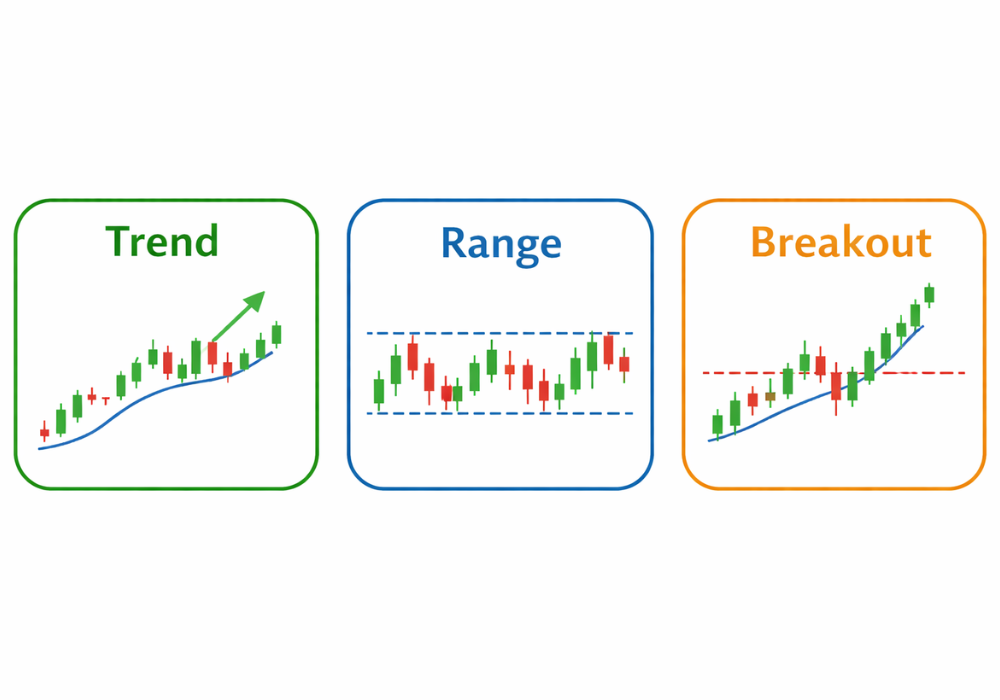
- Trending market setup
- Range-bound market setup
- Breakout volatility setup
This covers most market environments without overwhelming your mind.
Step 1: Identify Market Conditions First
Before defining setups, define environments.
Markets typically rotate between:
- Trending
- Ranging
- High-volatility breakout
Your system must match the setup to the condition.
Random entries happen when traders ignore the environment.
Example mistake:
Using a breakout strategy in a sideways market.
That leads to repeated false signals.
Your first rule:
No setup without condition alignment.
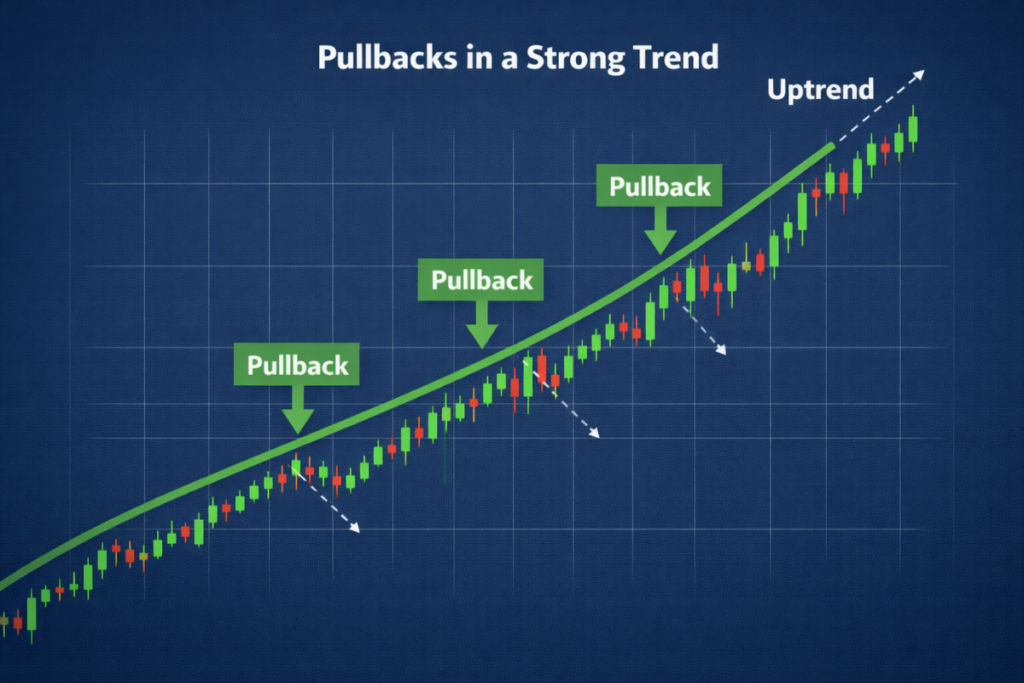
Step 2: Define Setup #1—Trend Continuation
Purpose: Capture pullbacks in a strong trend.
Example rules:
Condition:
Higher highs and higher lows (uptrend).
Entry:
Pullback to moving average + bullish confirmation candle.
Stop-loss:
Below is a recent swing low.
Target:
Minimum 1:2 risk-reward.
This setup works best in clear directional markets.
It avoids chasing extended moves.
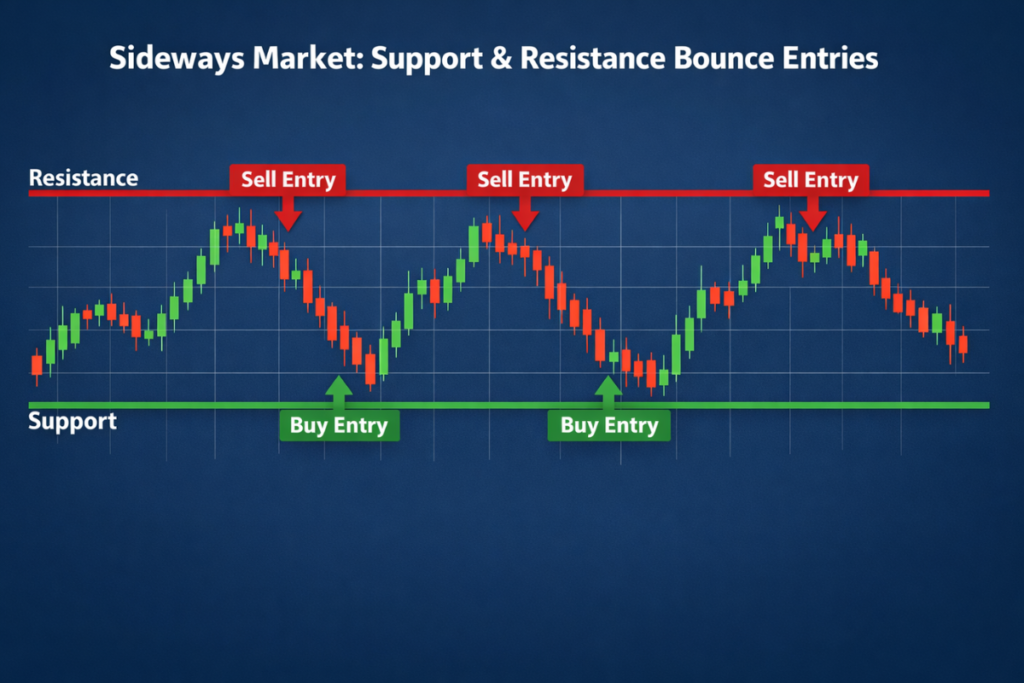
Step 3: Define Setup #2—Range Reversal
Purpose: Trade the market when the price is bouncing between support and resistance.
Condition:
Clear horizontal range with multiple touches.
Entry:
Buy near support with bullish confirmation.
Sell near resistance with bearish confirmation.
Stop-loss:
Just outside the range boundary.
Target:
Opposite side of the range.
This setup prevents forcing trend trades in non-trending markets.
It teaches patience and location-based trading.
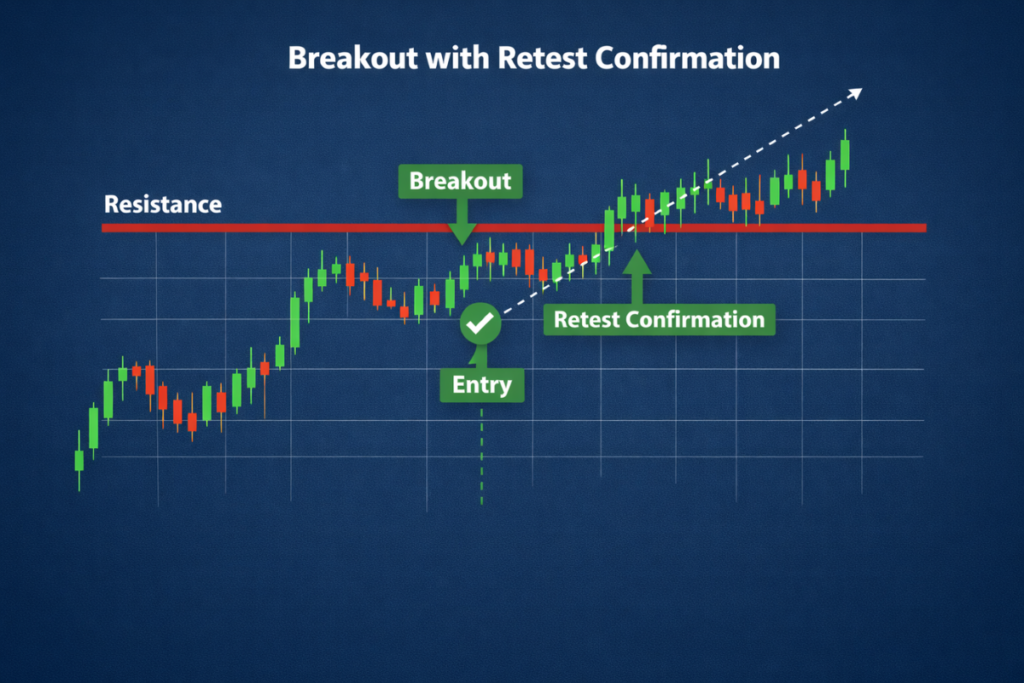
Step 4: Define Setup #3—Breakout + Retest
Purpose: Capture momentum expansion.
Condition:
Price consolidates tightly near the key level.
Entry:
Breakout above resistance followed by a small pullback retest.
Stop-loss:
Below the breakout level.
Target:
Measured move or 1:2 minimum.
Important:
Never chase breakout candles blindly.
Wait for retest confirmation.
This reduces false breakouts.
Step 5: Create Setup Selection Rules
Before each trade, ask:
Which of the 3 setups is this?
If it does not clearly match one:
No trade.
This eliminates impulsive entries.
If you cannot categorize it, skip it.
Clarity must be obvious.
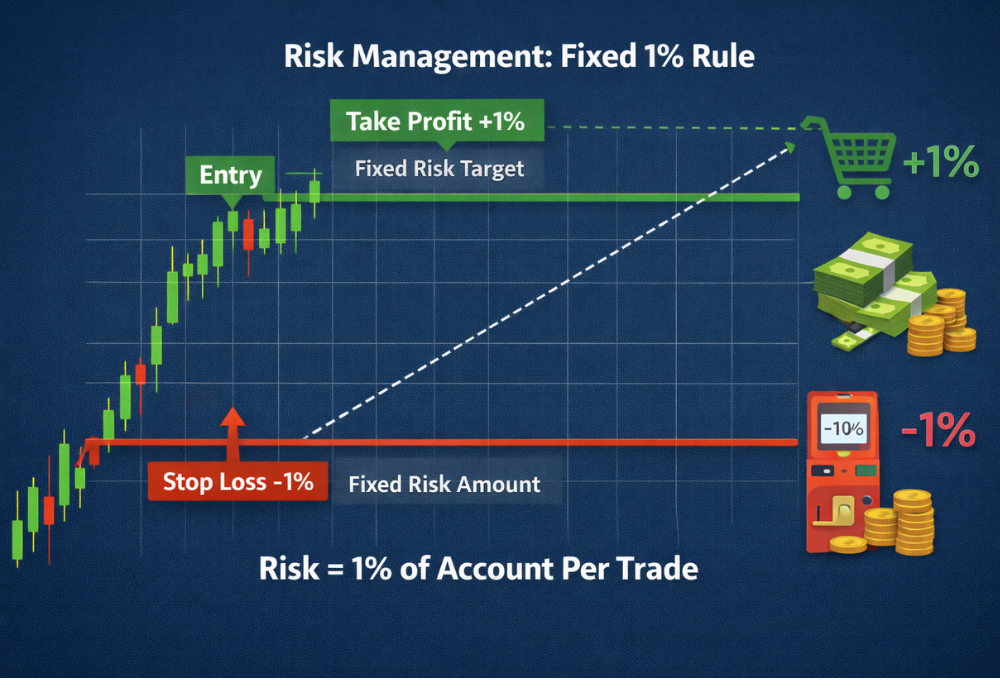
Step 6: Standardize Risk Across All Setups
Your system must include consistent risk management:
- Risk per trade = 1%
- Max 2–3 trades per day
- Daily loss cap = 2%
Without standardized risk, even good setups become inconsistent.
The system is not just entry rules.
It is risk control and execution discipline.
Step 7: Track Performance by Setup Type
The journal must categorize trades:
Trend Setup:
Range Setup:
Breakout Setup:
After 30–50 trades, analyze:
- Which setup has the highest win rate?
- Which has the best R:R?
- Which performs poorly in certain volatility?
Now improvement becomes scientific.
You are refining components.
Not guessing randomly.
The Psychological Advantage of a 3-Setup System
When you reduce randomness:
- Emotional swings reduce
- Confidence increases
- Losses feel statistical, not personal
- Decision-making becomes faster
Your brain prefers structured repetition.
Random trading increases cognitive fatigue.
Systems reduce mental load.
Common Mistakes While Building a System
- Overcomplicating with too many indicators
- Changing setup rules after 2 losses
- Mixing setups mid-trade
- Ignoring market condition alignment
- Increasing lot size emotionally
Keep it simple.
Three setups are enough.
The 60-Day System Discipline Plan
For 60 days:
- Trade only your 3 setups
- Skip everything else
- Track data carefully
- Review weekly
- Avoid modification unless statistical failure confirmed
After 60 days, you will notice:
- Clearer performance trends
- Reduced impulsive trades
- Better drawdown control
- Stronger confidence
Systems build identity.
Random entries build confusion.
What Happens When You Master 3 Setups?
You start recognizing:
- Subtle differences in momentum
- Fake signals
- Optimal timing
- High-probability days
Experience compounds only when structure exists.
Random experience teaches nothing.
Structured repetition builds skill.
Final Thoughts:
- Structure Creates Stability
- If you are tired of random entries:
- Stop searching for magical indicators.
- Build structure.
- Define three setups.
- Assign each to specific conditions.
- Standardize risk.
- Track performance by category.
- Review weekly.
- Trading success is not about predicting every move.
- It is about executing a small set of edges consistently.
- Three setups are enough.
- Master them.
- Refine them.
- Repeat them.
- And let consistency replace randomness.