Introduction:
The Trade That Destroys Months of Discipline
Every trader remembers that one day.
A clean setup fails.
Stop-loss gets hit.
You feel irritated.
Instead of stepping back, you enter again.
Bigger size.
Less patience.
No structure.
Within minutes, what started as a small, controlled loss turns into a large emotional spiral.
This is revenge trading.
And it is one of the fastest ways to destroy an account.
Revenge trading is not about strategy failure.
It is about emotional escalation.
The good news?
It can be controlled—not by motivation, but by structure.
This article will give you a simple daily rule framework that eliminates revenge trading systematically.
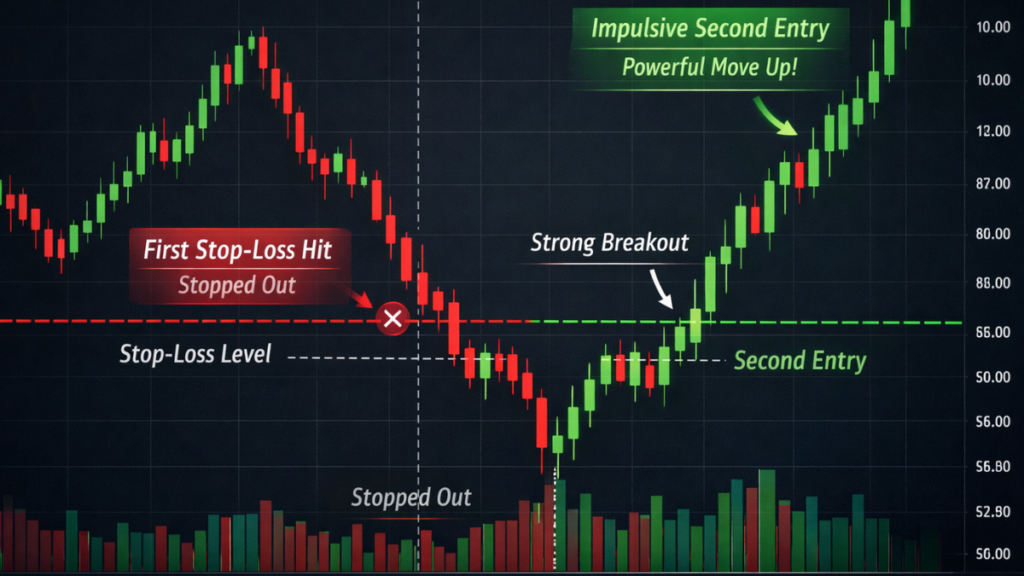
What Is Revenge Trading?, Really?
Revenge trading is not just re-entering after a loss.
It is entering with emotional intention.
The purpose shifts from:
“Execute my edge.”
to
“Recover my money immediately.”
That shift changes:
- Position size
- Risk tolerance
- Stop-loss discipline
- Decision clarity
It becomes emotional recovery, not strategic execution.
And emotional recovery rarely follows probabilities.
Why Revenge Trading Feels Logical in the Moment
After a loss, your brain reacts to discomfort.
Psychologically:
- Loss triggers stress response
- Ego feels challenged
- You want validation
- You want control restored
The fastest illusion of control?
Another trade.
It feels like action.
But often, it multiplies damage.
The Real Cost of Revenge Trading
Financial damage is obvious.
But psychological damage is deeper:
- Confidence erodes
- Discipline weakens
- Fear increases
- Overtrading becomes a habit.
Many traders don’t blow accounts from bad strategies.
They blow accounts from one revenge session.
Stopping revenge trading is not optional.
It is a survival skill.
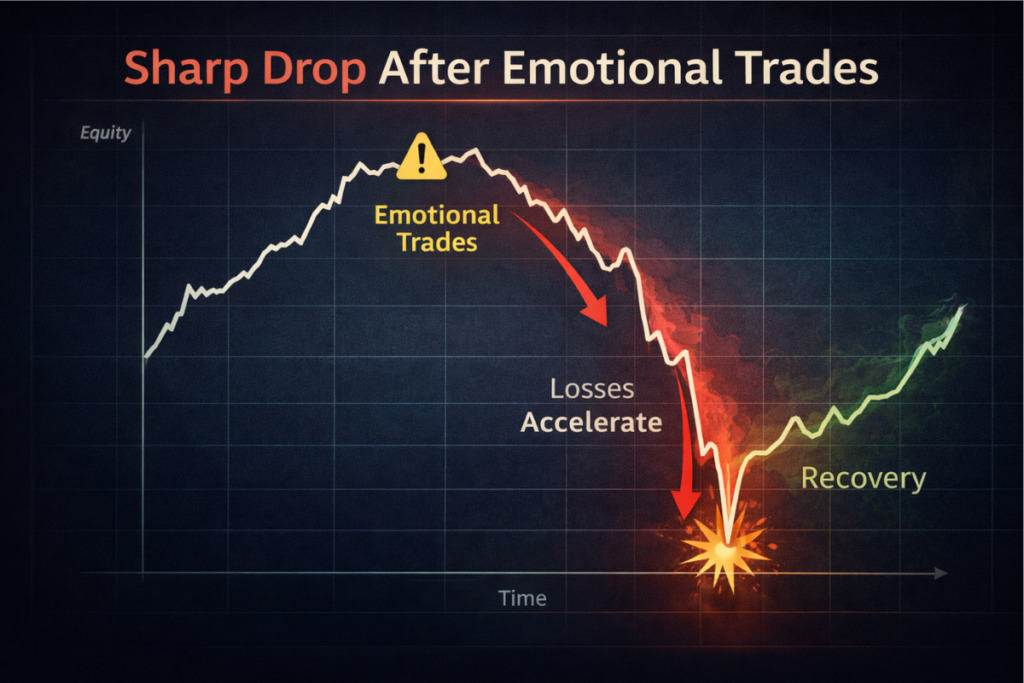
The Simple Daily Rule Framework
This framework is not complicated.
It is mechanical.
Because emotions cannot be controlled by emotion.
They must be controlled by rules.
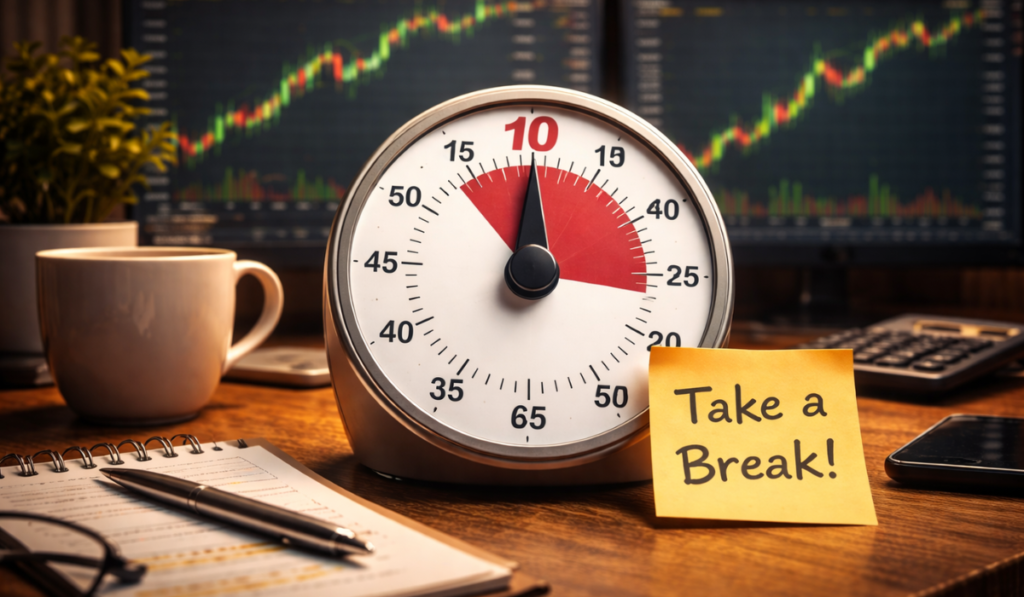
Rule 1: The 10-Minute Reset Rule
After any losing trade:
You must wait 10 full minutes before entering another position.
No chart staring.
No planning recentry.
Step away physically.
Stand up.
Drink water.
Walk briefly.
Why?
Because emotional intensity reduces with time.
Most revenge trades happen within 2–3 minutes of loss.
The 10-minute reset interrupts impulse.
Rule 2: The 2% Daily Loss Lock
Define a strict daily maximum loss.
Example:
Capital: ₹50,000
Daily loss cap: 2% = ₹1,000
Once reached:
Trading stops immediately.
No exceptions.
Revenge trading usually escalates after cumulative losses.
A hard daily stop protects you from emotional spirals.
Think of it as an emotional circuit breaker.
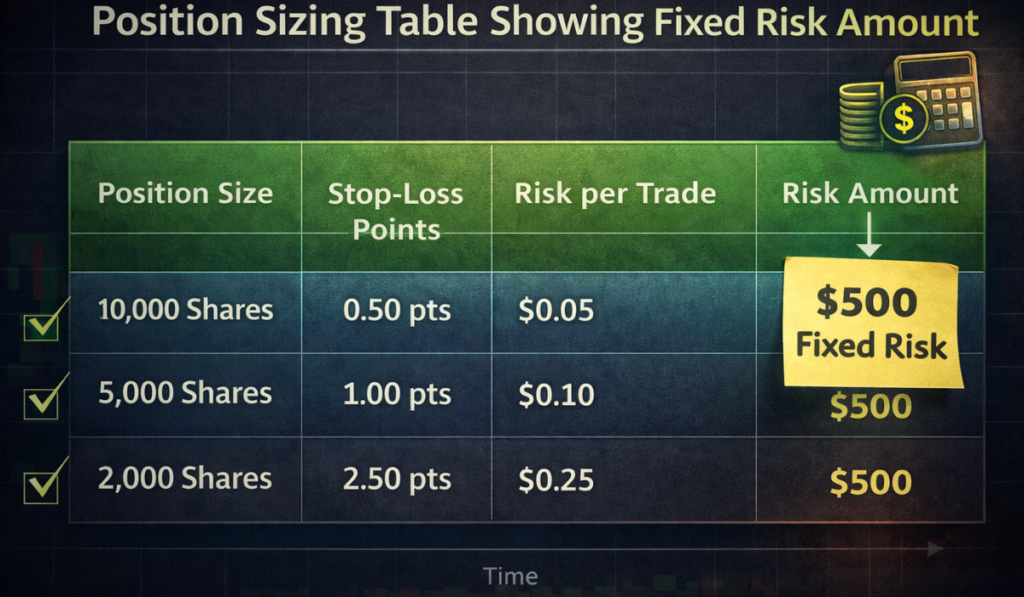
Rule 3: Fixed Position Size—No Increase After Loss
Many revenge trades involve:
Increasing lot size to recover quickly.
This is dangerous.
Your rule:
Position size never increases after a loss.
It either:
- Remains same
OR - Reduces
Never larger.
This removes the “recovery rush” impulse.
Rule 4: The One-Loss Reflection Question
After a losing trade, ask:
“Was this a rule-following loss or emotional mistake?”
If it was rule-following:
Accept it. Move on calmly.
If it was emotional:
Stop trading for the day.
Because emotional mistakes tend to cluster.
Recognizing mistakes early prevents bigger damage.
Rule 5: Maximum 2 Trades Per Day
Revenge trading thrives in unlimited trade environments.
If you limit trades to 2 per day:
You eliminate space for emotional escalation.
Example:
Trade 1 loses.
Trade 2 is allowed only if calm and structured.
After 2 trades:
Platform closed.
Even if you feel the market is moving strongly.
Discipline must override opportunity.
The Emotional Awareness Journal
Add this small section to your journal:
After each loss, rate emotion from 1–5:
1 = Calm
3 = Slightly frustrated
5 = Angry
If emotion level is 4 or 5:
Stop trading for the day.
This prevents emotional escalation.
Self-awareness stops revenge behavior early.
What to Do Instead of Revenge Trading
After a loss:
- Review the chart objectively
- Identify if setup was valid
- Log the trade
- Move on
Remember:
Loss is part of probability.
Your edge works over a series, not a single trade.
Revenge trading focuses on a single outcome.
Professionals focus on long-term execution.

The 30-Day No Revenge Challenge
If you want real transformation:
For 30 days:
- Apply 10-minute reset
- Apply 2% daily stop
- Never increase lot after a loss.
- Limit to 2 trades daily
- Journal emotions
At the end of 30 days, evaluate:
How many emotional trades were reduced?
Most traders notice:
- Reduced stress
- More stable equity
- Improved clarity
- Better confidence
Consistency builds trust in yourself.
Why This Framework Works
Because it removes decision-making during emotional peaks.
When emotional intensity rises:
Rules take over.
You don’t negotiate with rules.
You execute them.
Structured limits protect traders from themselves.
The Truth About Emotional Discipline
You will not eliminate emotion.
You will manage it.
Revenge trading doesn’t disappear because you “feel calmer.”
It disappears because you build barriers against it.
Structure beats motivation.
Always.
Final Thoughts: Protect Your Capital From Yourself
The market is not your enemy.
Your emotional reaction is.
Revenge trading is natural—but preventable.
With:
- A 10-minute reset
- A strict daily loss cap
- Fixed position sizing
- Trade limits
- Emotional journaling
You transform from a reactive trader to a controlled executor.
Remember:
One revenge day can erase weeks of discipline.
But one disciplined month can change your trading life.
Control the day.
Control the trade.
Control yourself.
The profits will follow.