Introduction
Investing in index funds has become one of the most popular and safest ways for Indian investors to build long-term wealth. Among them, the Nifty Next 50 Index Fund Direct Growth category is attracting huge attention because of its strong growth potential and exposure to future large-cap companies.
For a smart investment option with higher growth potential than traditional large-cap funds, this guide will help you understand everything about the best Nifty Next 50 index fund direct growth plans, their benefits, risks, returns, and how to choose the right one in 2026.

What is a Nifty Next 50 Index Fund?
A Nifty Next 50 Index Fund tracks the Nifty Next 50 Index, which consists of the 50 companies that come immediately after the Nifty 50 companies in terms of market capitalization.
These companies are often considered the following:
- Future blue-chip companies
- Fast-growing businesses
- Emerging leaders of various sectors
Unlike actively managed mutual funds, index funds simply mirror the index performance, which helps reduce management costs.
Why Investors Prefer Direct Growth Plans
1. Lower Expense Ratio
Direct plans avoid distributor commissions, leading to lower fees.
2. Higher Long-Term Returns
Since expenses are lower, investors keep more profits over time.
3. Power of Compounding
Growth plans automatically reinvest profits, helping wealth compound faster.

Why Nifty Next 50 Funds are Popular in 2026
The Indian economy is expanding rapidly, and many companies in the Nifty Next 50 index are expected to become future market leaders.
Key Reasons:
- Strong long-term growth potential
- Diversification across sectors
- Passive investing simplicity
- Lower cost compared to active funds
- Suitable for SIP investments
These funds are especially attractive for young investors who want higher growth over 10–15 years.
Best Nifty Next 50 Index Fund Direct Growth Options
Here are some popular choices investors frequently consider:
| Fund Name | Type | Suitable For |
| ICICI Prudential Nifty Next 50 Index Fund Direct Growth | Index Fund | Long-term investors |
| UTI Nifty Next 50 Index Fund Direct Growth | Passive Fund | Beginners |
| HDFC Nifty Next 50 Index Fund Direct Plan Growth | Equity Index | SIP investors |
| SBI Nifty Next 50 Index Fund Direct Growth | Index Investing | Wealth creation |
| Nippon India Nifty Next 50 Junior BeES FoF | ETF-based | Advanced investors |
Nifty Next 50 vs Nifty 50: Which is Better?
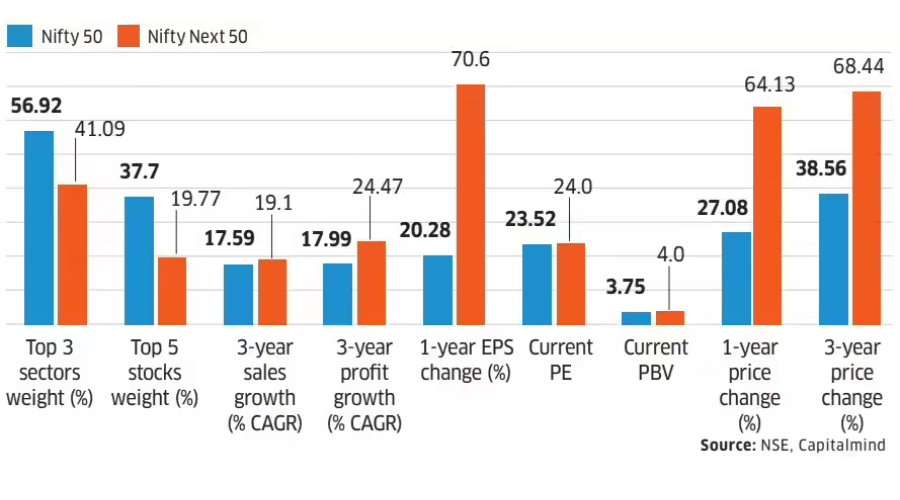
| Feature | Nifty 50 | Nifty Next 50 |
| Risk | Lower | Moderate to High |
| Growth Potential | Stable | Higher |
| Volatility | Lower | Higher |
| Suitable For | Conservative investors | Aggressive long-term investors |
Important Insight
Nifty Next 50 funds can be more volatile in the short term but may deliver better long-term returns due to higher-growth companies.
Historical Performance of Nifty Next 50
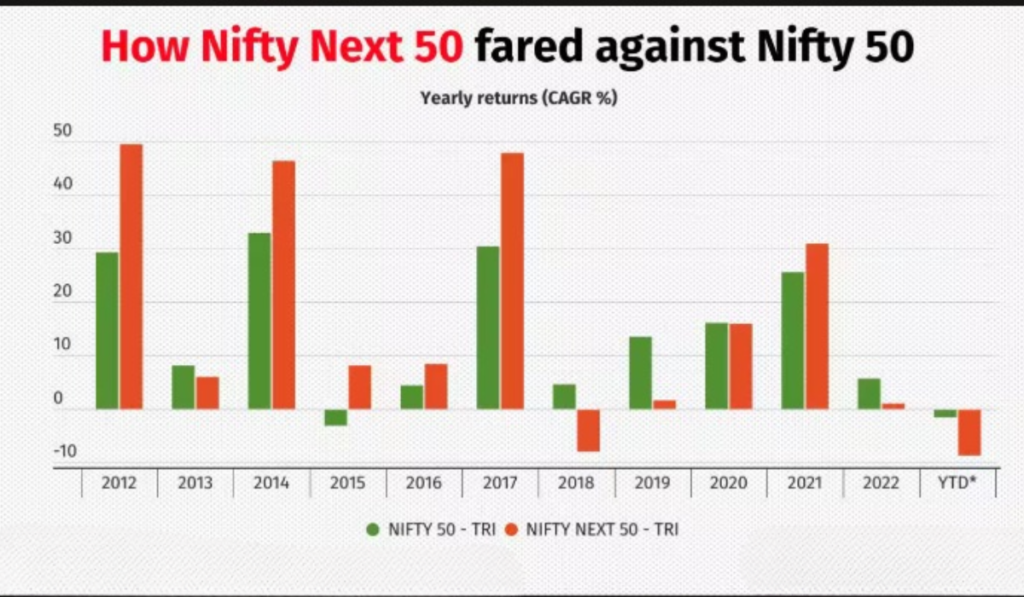
Historically, the Nifty Next 50 index has outperformed many traditional large-cap funds during long investment periods.
Reasons for Strong Performance:
- Rapidly growing companies
- Sector diversification
- Expansion opportunities
- Market leadership transition
However, short-term fluctuations are common, so investors should stay invested patiently.
Who Should Invest in Nifty Next 50 Index Funds?
These funds are ideal for:
- Long-term investors
- SIP investors
- Young professionals
- Passive investors
- Investors seeking higher growth
Not Ideal For:
- Short-term traders
- Investors needing stable monthly income
- Extremely risk-averse investors
SIP vs. Lump Sum: Which is Better?
SIP Investment
Best for most investors because:
- Reduces market timing risk
- Encourages disciplined investing
- Suitable during volatile markets
Lump Sum Investment
Suitable when:
- Market corrections happen
- Investor has surplus funds
- Long-term horizon exists
For beginners, SIP is usually the safer and smarter option.
Risks of Investing in Nifty Next 50 Funds
Although these funds have high growth potential, investors must understand the risks.
Main Risks:
- Market volatility
- Economic slowdown impact
- Mid-to-large cap fluctuations
- Temporary drawdowns
How to Reduce Risk:
- Invest through SIP
- Stay invested long term
- Avoid panic selling
Taxation on Nifty Next 50 Index Funds
These funds are taxed like equity mutual funds in India.
Short-Term Capital Gains (STCG)
- Less than 1 year holding
- Taxed at applicable equity rates
Long-Term Capital Gains (LTCG)
- More than 1 year holding
- Tax benefits available up to specified limits
Tax rules may change over time, so investors should check the latest regulations.
How to Choose the Best Nifty Next 50 Index Fund Direct Growth Plan
Before investing, compare:
1. Expense Ratio
A lower expense ratio is generally better.
2. Tracking Error
A lower tracking error means the fund follows the index more accurately.
3. Fund Size
Large AUM funds often provide better liquidity.
4. Consistency
Check long-term tracking performance.
5. Investment Platform
Choose trusted mutual fund platforms.
Advantages of Passive Investing
Passive investing through index funds is becoming extremely popular because the following are true:
- Lower costs
- No fund manager dependency
- Simpler investment strategy
- Long-term wealth creation
- Reduced emotional investing
Many successful investors globally prefer passive investing for steady wealth accumulation.
Common Mistakes Beginners Should Avoid
1. Expecting Quick Returns
Index investing works best over years, not weeks.
2. Stopping SIP During Market Falls
Market corrections often create future growth opportunities.
3. Investing Without Goals
Always define your investment horizon.
4. Ignoring Asset Allocation
Diversification remains important.
Future Outlook of Nifty Next 50 Funds in India
India’s economy is expected to continue growing strongly in sectors like the following:
- Banking
- Technology
- Manufacturing
- Consumer goods
- Infrastructure
Many companies in the Nifty Next 50 index could eventually enter the Nifty 50 index, creating strong long-term growth opportunities for investors.
This makes Nifty Next 50 index funds attractive for wealth creation over the next decade.

Frequently Asked Questions (FAQs)
Is Nifty Next 50 better than Nifty 50?
For long-term aggressive growth investors, Nifty Next 50 may offer higher returns but with higher volatility.
Is SIP good for Nifty Next 50 funds?
Yes, SIP helps manage volatility and supports disciplined investing.
Are index funds safe?
Index funds are generally considered lower-risk compared to many actively managed thematic funds, but market risks still exist.
How long should I invest?
A minimum horizon of 5–10 years is generally recommended.
Which is the best Nifty Next 50 index fund direct growth plan?
The best fund depends on factors like expense ratio, tracking error, and investor goals.
Final Thoughts
The best Nifty Next 50 Index Fund Direct Growth plans can be excellent choices for investors seeking long-term wealth creation through passive investing.
These funds combine:
- Growth potential
- Diversification
- Low-cost investing
- Simplicity
However, investors should remain patient, continue SIPs during volatility, and stay focused on long-term financial goals.
For beginners entering the stock market or mutual fund investing journey in 2026, Nifty Next 50 index funds can provide a strong foundation for future wealth building.