Intraday trading attracts millions of beginners because it offers the opportunity to participate in daily market movements. However, many new traders fail because they start without a proper system. One of the simplest and most reliable ways to begin intraday trading is by using a moving average strategy
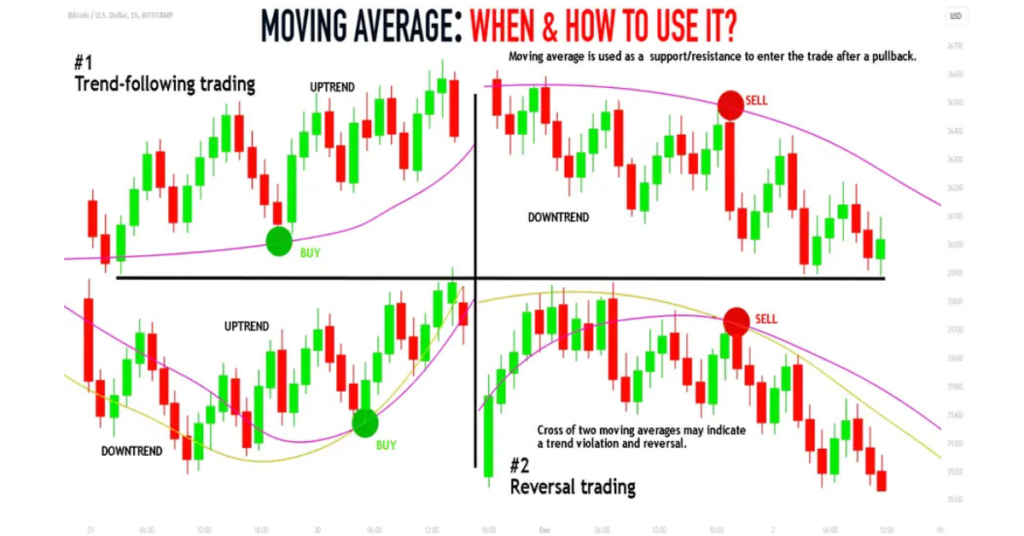
Moving averages help traders understand market direction, reduce emotional decisions, and avoid random price noise. This moving average explains intraday trading strategy for NIFTY beginners in a step-by-step, easy-to-understand way. Even if you are completely new to trading, this guide will help you build a strong foundation.
This strategy is based on price action and trend following, making it suitable for traders across global markets.
What Is a Moving Average?
A moving average is a technical indicator that calculates the average price of an asset over a specific number of candles. It continuously updates as new price data appears, creating a smooth line on the chart.
The main purpose of a moving average is to:
Identify market trend
Filter unnecessary price fluctuations
Help traders stay aligned with price direction
Instead of guessing where the market will go, moving averages allow traders to react logically to price movement.
Types of Moving Averages
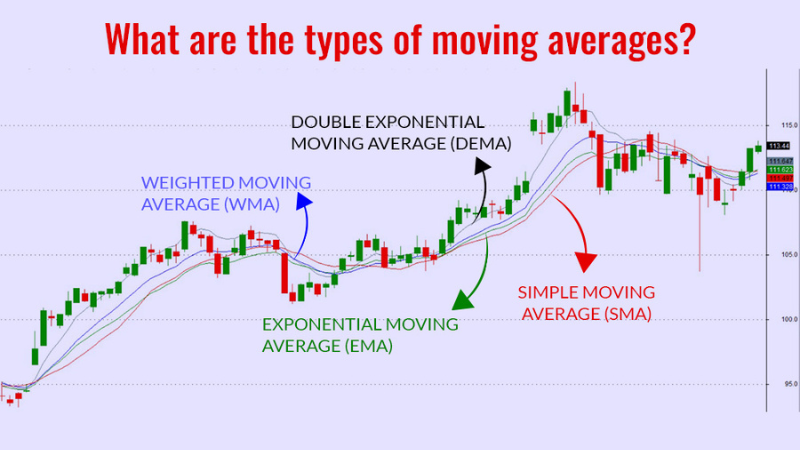
There are different types of moving averages, but beginners only need to understand two.
Simple Moving Average (SMA)
The Simple Moving Average calculates the average price over a fixed number of periods. It reacts slowly to price changes and is useful for identifying long-term trends.
Exponential Moving Average (EMA)
The Exponential Moving Average gives more importance to recent prices. Because of this, it reacts faster and is more suitable for intraday trading.
For beginners, EMA is recommended because it provides quicker signals without being too complex.
Why Moving Averages Are Ideal for Intraday Trading
Intraday markets move fast. Beginners often get confused by sudden price fluctuations. Moving averages help by:
Showing the dominant trend
Keeping traders disciplined
Reducing emotional entries
Providing visual clarity
Because of their simplicity, moving averages are widely used by professional traders as well as beginners.
Best Time Frame for Intraday Moving Average Strategy
Choosing the right time frame is crucial.
For beginners, the most effective time frames are:
15-minute chart – Best for learning and clarity
5-minute chart – For experienced traders
Lower time frames increase noise and false signals, so beginners should avoid them initially.
Best Moving Averages for NIFTY Intraday Trading
A simple and beginner-friendly setup includes:
9 EMA (Fast moving average)
21 EMA (Slow moving average)
This combination helps identify early trend changes while still maintaining reliability.
Moving Average Intraday Trading Strategy – Step by Step
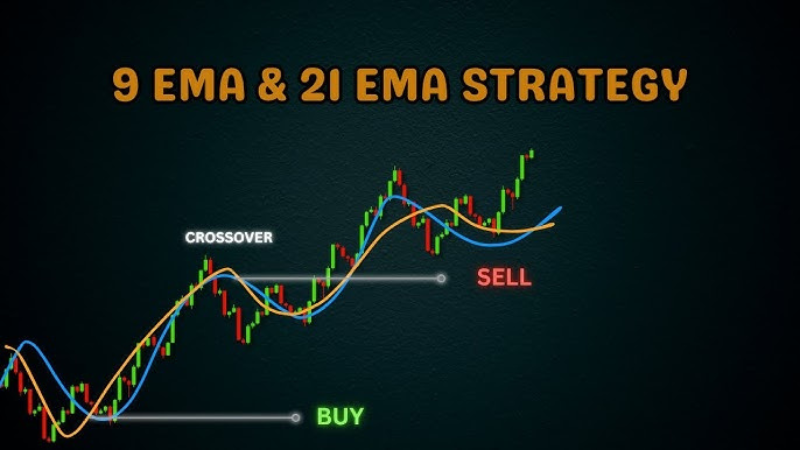
This is a trend-following EMA crossover strategy, ideal for beginners.
Step 1: Chart Setup
Open NIFTY index or NIFTY futures chart
Select 15-minute time frame
Add indicators:
9 EMA
21 EMA
Keep the chart clean. Avoid adding too many indicators.
Step 2: Identifying the Trend
Uptrend: 9 EMA is above 21 EMA
Downtrend: 9 EMA is below 21 EMA
Only trade in the direction of the trend. This single rule eliminates many losing trades.
Step 3: Buy Entry Rules
Enter a buy trade when:
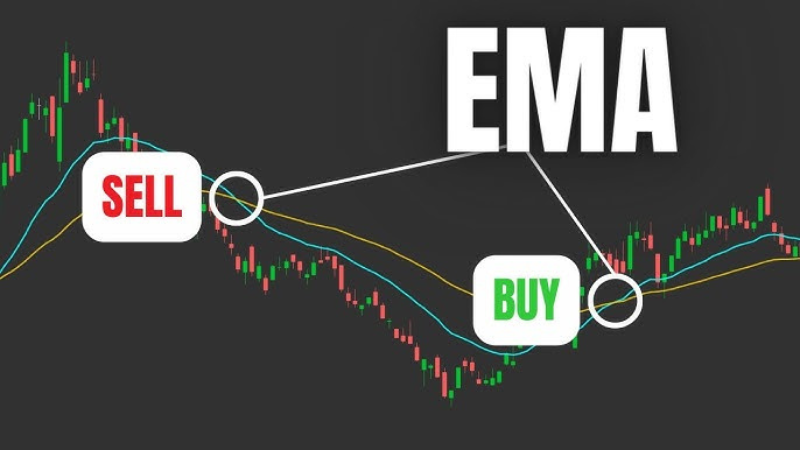
9 EMA crosses above 21 EMA
Candle closes above both moving averages
Market structure supports upward movement
Avoid entering during sideways movement.
Step 4: Sell Entry Rules
Enter a sell trade when:
9 EMA crosses below 21 EMA
Candle closes below both moving averages
Price shows downward momentum
Patience is essential. Do not chase trades.
Stop Loss and Target Rules
Risk management is more important than entry signals.
Stop Loss Placement
For buy trades: Below recent swing low
For sell trades: Above recent swing high
Never trade without a stop loss.
Target Setting
Minimum risk-reward: 1:1
Ideal risk-reward: 1:2
Consistent small profits build long-term success.
Best Market Conditions for This Strategy
This moving average strategy works best when:
Market is trending
Volatility is moderate
There is clear price direction
Avoid trading during major news releases or extremely sideways markets.
Common Mistakes Beginners Must Avoid
Overtrading
Taking too many trades leads to emotional decisions and losses.
Ignoring Trend Direction
Trading against the moving average trend often results in failure.
Skipping Risk Management
No strategy can survive without proper risk control.
Capital Management for Beginners
Begin with a small amount of capital. Risk only 1–2% per trade.
Do not increase position size after losses. Focus on consistency, not recovery.
Trading Psychology and Discipline
Even a simple moving average strategy fails without discipline.
Successful traders:
Follow rules strictly
Accept losses calmly
Avoid revenge trading
Moving averages help maintain emotional balance by providing objective signals.
Can This Strategy Be Used in Other Markets?
Yes. This strategy works well in:
Stock indices
Individual stocks
Futures
Forex
Cryptocurrencies
The logic of trend following remains universal.
Final Thoughts
The moving average intraday trading strategy for NIFTY beginners is an excellent starting point for anyone entering intraday trading. It is simple, structured, and adaptable to global markets.
Focus on learning, consistency, and discipline. Over time, this strategy can help you build confidence and long-term trading skills.